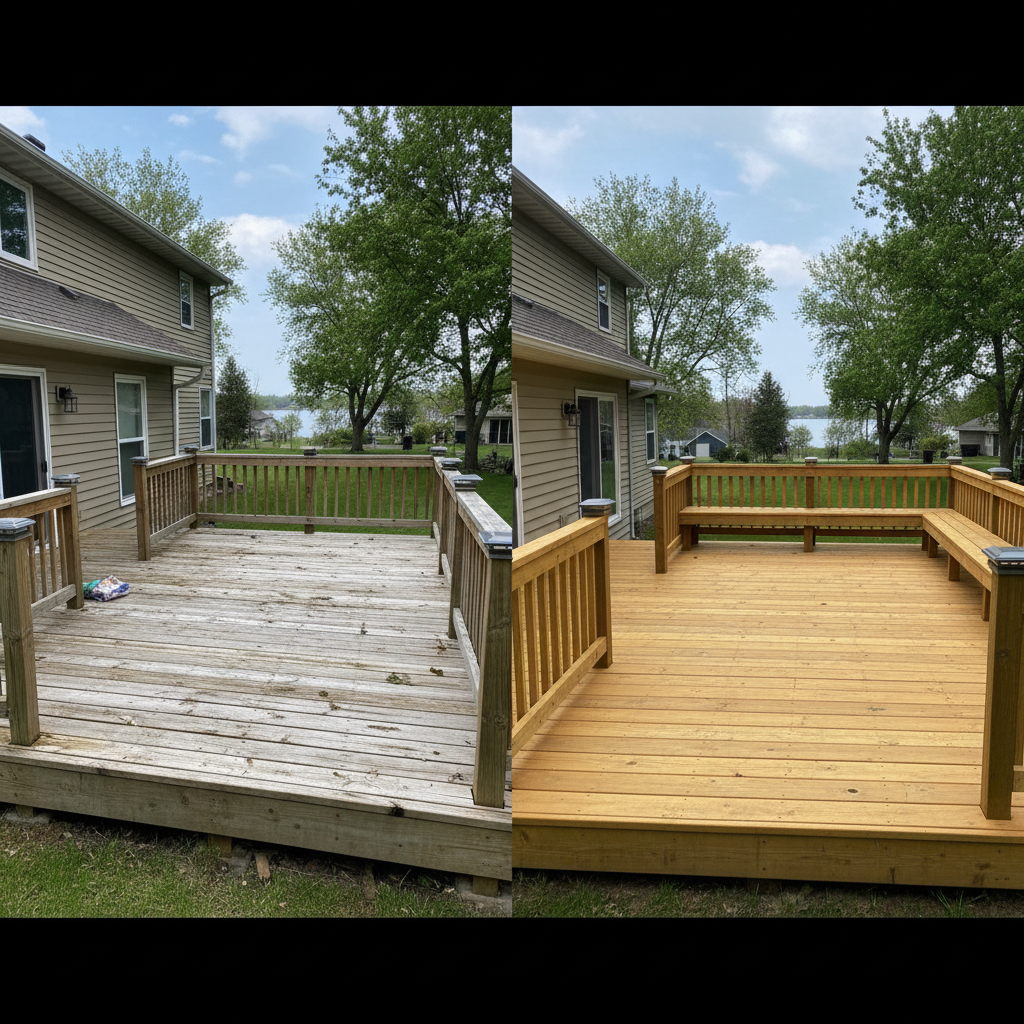
Alright, so you're thinking about a new wooden deck for your place here in Burnsville. That's a great choice – nothing beats the natural look and feel of real wood, does it? But once you decide on wood, you've still got another big decision to make: what kind of wood? For most folks, it really comes down to two main players: pressure-treated lumber or cedar.
I've built a lot of decks over the years, seen 'em hold up and seen 'em fail, especially with our wild Minnesota weather. So, let's talk straight about these two options and what you can actually expect.
Pressure-Treated Lumber: The Workhorse
Pressure-treated wood is probably what most people picture when they think of a wooden deck. It's usually pine or fir that's been chemically treated to resist rot, fungal decay, and insect infestation. That treatment makes it a real survivor.
- Cost: This is where pressure-treated wood really shines. It's significantly more affordable upfront than cedar, sometimes half the price or even less. If budget is your main concern, this is usually the way to go.
- Durability: It's built to last. The chemicals do their job, and you can expect a pressure-treated deck to stand up to our harsh winters, humid summers, and everything in between for a good 20-30 years, especially if it's maintained. I've seen pressure-treated decks in the Terrace Oaks neighborhood hold up beautifully for decades when they're taken care of.
- Maintenance: It needs regular maintenance, just like any wood deck. You'll want to clean it annually and reapply a good quality stain and sealer every 2-3 years. If you skip this, it'll still be structurally sound, but it'll start to gray and splinter, and you'll regret it later.
- Appearance: Freshly installed, it's got a greenish tint from the treatment, which fades over time to a light brown or gray. It's not as naturally beautiful as cedar, and it can be prone to warping, cracking, and checking (those small splits) as it dries out. You can stain it any color you like, but the grain isn't as pronounced or attractive as cedar.
Cedar: The Natural Beauty
Cedar, particularly Western Red Cedar, is a premium choice for decks. It's naturally resistant to rot, decay, and insects because it contains natural oils that deter them. It's a beautiful wood, no doubt about it.
- Cost: Get ready for a higher price tag. Cedar can be anywhere from 50% to 100% more expensive than pressure-treated lumber, sometimes even more depending on the grade and current market. It's an investment, plain and simple.
- Durability: Cedar is naturally durable, thanks to those oils. It holds up well against the elements, but it's a softer wood than pressure-treated pine, so it can be more prone to dents and scratches. With proper care, a cedar deck can easily last 15-25 years.
- Maintenance: Similar to pressure-treated, cedar needs regular cleaning and sealing. If you don't seal it, it will weather to a beautiful silvery-gray patina, which some people love. But even if you like the gray, you still need to seal it to protect it from moisture and UV damage, otherwise, it can become brittle and splintery.
- Appearance: This is cedar's strong suit. It has a gorgeous, rich reddish-brown color with a distinctive grain that looks fantastic. It's less prone to warping and checking than pressure-treated wood, giving you a smoother, more uniform surface. It just looks more refined and high-end.
So, Which One Should You Pick for Your Burnsville Home?
Here's my honest take. For most homeowners in Burnsville, especially with our freeze-thaw cycles and the beating sun, pressure-treated lumber is usually the smarter, more practical choice.
Why? Because it offers incredible value. You get excellent durability and longevity for a significantly lower cost. While it might not have the initial 'wow' factor of cedar's natural color, a well-stained pressure-treated deck looks fantastic and performs like a champ. You can achieve a beautiful finish with a good quality stain, and it'll stand up to the Minnesota climate without breaking the bank.
Now, if budget isn't your primary concern and you're really chasing that premium, natural aesthetic, then cedar is a beautiful option. It's a luxury product, and it certainly delivers on looks. Just be prepared for the higher upfront cost and understand that while it's naturally resistant, it still needs consistent maintenance to look its best and last.
Ultimately, both can make for a great deck. It just comes down to what you value most: maximum bang for your buck and robust performance, or that undeniable natural beauty. Either way, making sure it's built right from the start is key. That's where Burnsville Custom Decks comes in – we make sure your wood deck, whatever you choose, is built to last and look great for years to come.