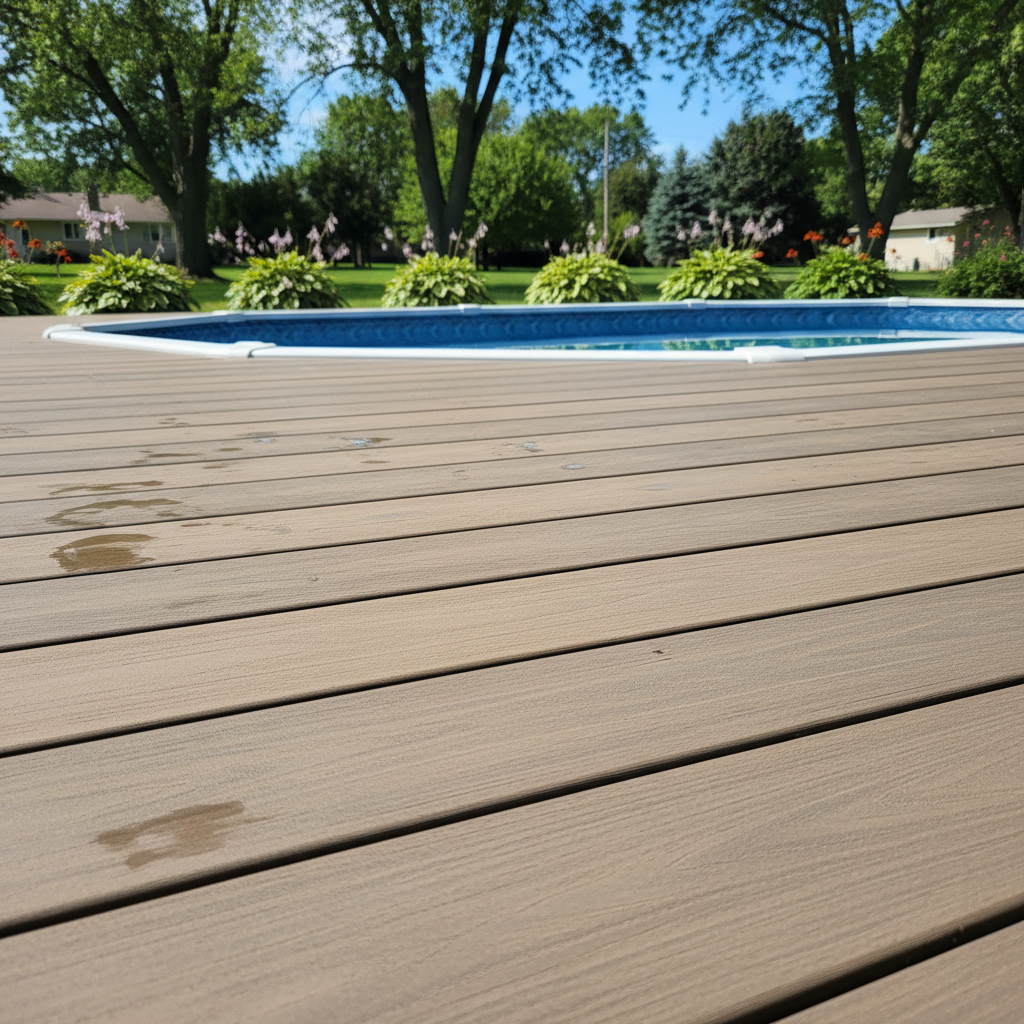
What's the best material for a pool deck in Minnesota?
This is probably the first question everyone asks, and it's a good one. You've got constant moisture to contend with, plus UV exposure, and our truly wild temperature swings here in Burnsville. For a pool deck, you really want something that can take all that punishment without turning into a maintenance nightmare. I usually point people toward composite decking, brands like Trex or Azek, for instance. It's built to resist rot, mold, fading, and splintering – all huge headaches for wood around a pool. Best of all, you don't have to stain or seal it every year, which saves a ton of time. Natural stone or concrete pavers are also solid choices if you're after a different look, but they can be a bit more involved to install and sometimes feel hotter underfoot. Wood, especially pressure-treated lumber, can work, but it needs a lot more regular care to stay looking good and safe near water.
How hot do different deck materials get in the sun?
This is a big one, especially when little bare feet are running around. Darker colors, no matter the material, will always soak up more heat. That’s just how physics works. With composite decking, some brands actually offer specific 'cool-to-the-touch' lines that use special pigments to reflect more sunlight. Lighter-colored composites, even the standard ones, will generally be cooler than their dark counterparts. Natural wood, like cedar or pressure-treated pine, tends to stay cooler than most composites because it doesn't hold heat as much. Concrete or stone pavers can get pretty toasty, especially dark ones, but lighter colors and permeable options can definitely help. If you're really worried about heat, lighter colors are your best friend, and maybe think about some shade structures over parts of the deck.
What kind of substructure do I need for a pool deck?
A pool deck's substructure is, in my opinion, even more important than the surface material. Think about it: the weight of people, furniture, and that constant moisture. You need something tough and rot-resistant. I always recommend using pressure-treated lumber for your joists and beams. It's specifically made to stand up to moisture and insects, which is exactly what you need around a pool. We often use ground contact rated lumber for anything that's touching the ground or really close to it. Proper spacing of joists is crucial too, usually 12 or 16 inches on center, depending on your decking material and the local Burnsville building codes. You'll also want to make sure there's good ventilation under the deck to stop moisture from building up, which can lead to mold and rot. And good footings, dug below our frost line? Absolutely non-negotiable if you want to prevent shifting and settling over time.
How do I make my pool deck safe for kids and pets?
Safety around a pool is absolutely essential, full stop. First off, if your deck is elevated at all, a good railing system is a must. For pool decks, you want railings that are tough for kids to climb, so vertical balusters are usually better than horizontal ones. The spacing between balusters is regulated for a reason – no more than 4 inches, so a child can't squeeze through. Non-slip surfaces are also huge. Many composite decking boards already have textured surfaces, and you can even get non-slip coatings for concrete or wood. If the deck is part of your pool enclosure, consider gates with self-closing and self-latching hardware. And of course, keep a close eye on those little ones – that's just common sense, right? We've built plenty of decks in neighborhoods like Crystal Lake and always make safety features for families a top priority.
What about drainage? How do I prevent water from pooling?
Drainage is a really big deal around a pool deck. You just never want standing water. It can damage your deck, create slip hazards, and become a perfect breeding ground for mosquitoes. When we design a pool deck, we always build in a slight slope, usually about 1/4 inch per foot, directing water away from the house and the pool. Sometimes, we'll put in French drains or channel drains around the deck's edge or between the deck and the pool coping to collect and redirect water. Proper grading of the ground around the deck is also important to make sure water flows away from your home's foundation. If your yard in Burnsville happens to have a high water table, we might even look at more extensive drainage solutions to protect your investment.
Can I add features like built-in seating or storage to a pool deck?
Absolutely, and I totally encourage it! Built-in features can really transform your pool deck from just a flat surface into a truly functional outdoor living space. Built-in benches are super popular; they save space, give you extra seating, and can even hide storage underneath for pool toys or towels. Planters integrated right into the deck design can add some greenery and soften the whole look. Some folks even want built-in coolers or small outdoor kitchen elements. When you're planning these, it's important to think about how they'll hold up to moisture and sun. For example, storage compartments need good drainage and ventilation to prevent mold. These custom touches are where a company like Burnsville Custom Decks truly shines, helping you design a space that fits your lifestyle perfectly.
How much maintenance will a pool deck require?
The amount of maintenance really boils down to the material you pick. If you go with a composite deck, you're looking at pretty low maintenance. A good scrub with soap and water a couple of times a year, maybe a light pressure wash to get rid of any algae or grime, and you're pretty much set. For wood decks, it's a completely different story. You'll need to clean, sand, and re-stain or seal it every one to three years, depending on the product and how much sun it gets. Neglect a wood deck around a pool, and it'll splinter, rot, and quickly become unsafe. Concrete and pavers are generally low maintenance too, but they might need occasional sealing to prevent stains and weed growth in the joints. No matter what, keep it clean. That's the simplest way to extend the life of any deck.